From scattered leads to a connected sales process: how a custom speed-to-lead system brings Yelp, Facebook, Google, phone, text, and email conversations into the contractor's CRM.
Illustrative walkthrough based on a GoodHandoff implementation. Screenshots, names, activity histories, and report figures below are fictional demonstrations. The source map shows the broader workflow design; available connections depend on each platform and account.
Home service contractors get leads from all sorts of places. A homeowner asks about a roof leak on Yelp. Someone fills out a Facebook ad while comparing contractors. Another finds the business on Google Maps and calls between meetings. By the time the office opens the CRM, there may already be conversations waiting in several different inboxes.
The difficulty is keeping responsibility intact as those conversations move. A notification reaches the office, but nobody knows whether someone called. A homeowner replies by text while an automated phone sequence keeps running. An estimate goes out, yet the original lead source never gets connected to the sale.
For this client, we built a custom system around that handoff. Rather than making the contractor's process fit the limitations of a single packaged follow-up tool, we connected intake, outreach, team ownership, and CRM updates around the way the business handles its leads. Retell AI supplied the AI phone capability. The custom build coordinated what happened before and after each call.
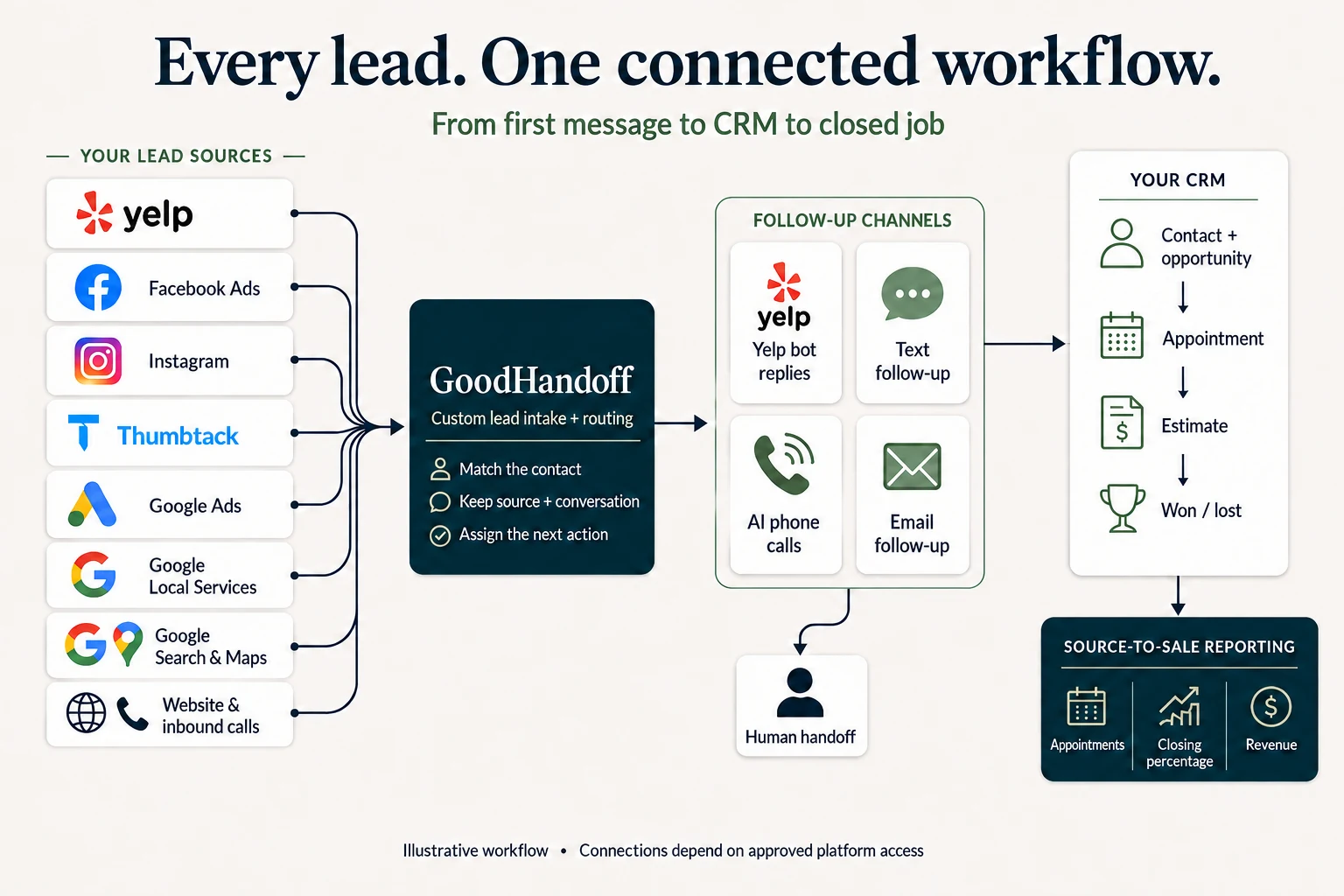
A lead should keep its history when it changes channels
Consider a homeowner who starts on Yelp. Their first message may explain the problem and include a general location, but it may not include a usable phone number. The useful first step is a relevant reply in the existing conversation. Asking for information the homeowner already provided makes the business look disconnected before anyone has even spoken.
An approved connection is required: Yelp’s Leads API documentation explains partner access and its Zapier alternative. The workflow preserves the request and source reference, matches or creates the lead, and determines the next useful action. When a phone number becomes available and the agreed contact rules allow it, the conversation can move into text or AI phone follow-up. That transition belongs to the same opportunity. The office should be able to see what the customer already said without searching Yelp, a texting platform, and a call dashboard separately.
This distinction also keeps reporting honest. A Google Ads lead that calls the business is still a Google Ads lead; phone is the contact channel. Counting it again as a separate phone lead inflates volume. When the source cannot be established reliably, the record stays unknown rather than receiving a convenient attribution.
The same design can accommodate Facebook and Instagram inquiries, website forms, inbound calls, and approved marketplace connections such as Thumbtack. Google's entry points include Ads, Local Services Ads, organic Search, and Maps, with other campaigns arriving through supported forms, landing pages, and calls. For example, Google Ads lead form webhooks deliver supported form submissions to an integration endpoint. Each connection needs its own intake details; the team should get a consistent lead record and next action at the other end.
Speed-to-lead starts with a useful response
A fast response matters most when it moves the conversation forward. For a contractor, that might mean establishing the service needed, confirming the property is in the service area, or finding a workable inspection window. An instant acknowledgment followed by silence still leaves the homeowner waiting.
We used Retell AI for the phone calls and built the surrounding logic to decide which lead was ready to call, what context the agent needed, and where the outcome belonged. A no-answer attempt, a request for a later callback, and an appointment conversation each require a different next step. Treating all three as “call completed” would hide the work the office still needs to do.
The practical measure is time to a meaningful attempt and then time to a two-way conversation. A provider accepting a call request does not prove the homeowner answered. An AI summary saying an appointment was discussed does not prove it appeared on the team's calendar. The system needs to retain those distinctions all the way into the CRM.
Follow up at different times—and respond to what happens
Homeowners are not available on the contractor's schedule. Someone who misses a morning call may be reachable in the afternoon or early evening. Repeating every attempt at the same hour can repeat the same missed opportunity.
We developed a cadence that varies follow-up across morning, afternoon, and early-evening windows, using the customer's local time and the business's agreed contact schedule. The purpose is to create more opportunities for a conversation. The timing, spacing, and number of attempts should reflect the source, the customer's responses, and the contractor's process.
- DAY 1 · MORNINGCall → text
No answer. A text offers a callback window and another way to respond.
- DAY 2 · AFTERNOONTry a different window
No answer. Save the attempt and retain the next action.
- DAY 3 · EARLY EVENINGConnect → confirm → email
Inspection confirmed in the CRM. Email the details and stop prospecting.
Illustrative sequence, using the fictional activity history below. Actual spacing and contact windows follow the agreed business rules.
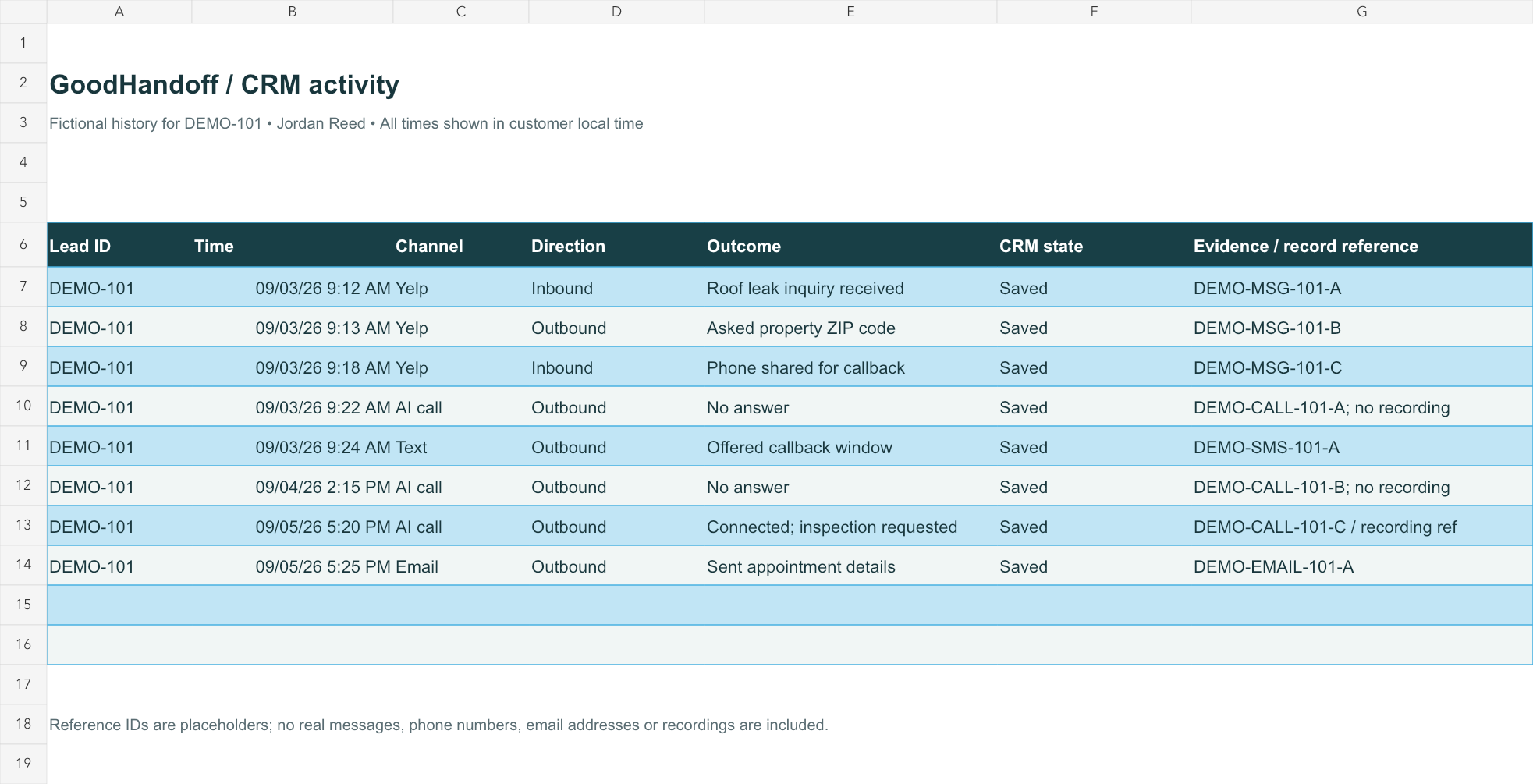
A constructed example of the record trail. These are sample events and placeholder references, not customer messages or evidence of a measured contact-rate improvement.
The lead tracker should answer “what needs attention?”
The office needs a fast way to see the work in front of it. Dedicated queue status, next-attempt time, and last-outcome fields show when the next contact is scheduled—or why it is paused. System events stay outside the customer communication history. A lead tracker provides that view: original source, requested service, current stage, responsible teammate, next action, and the state of the CRM record.
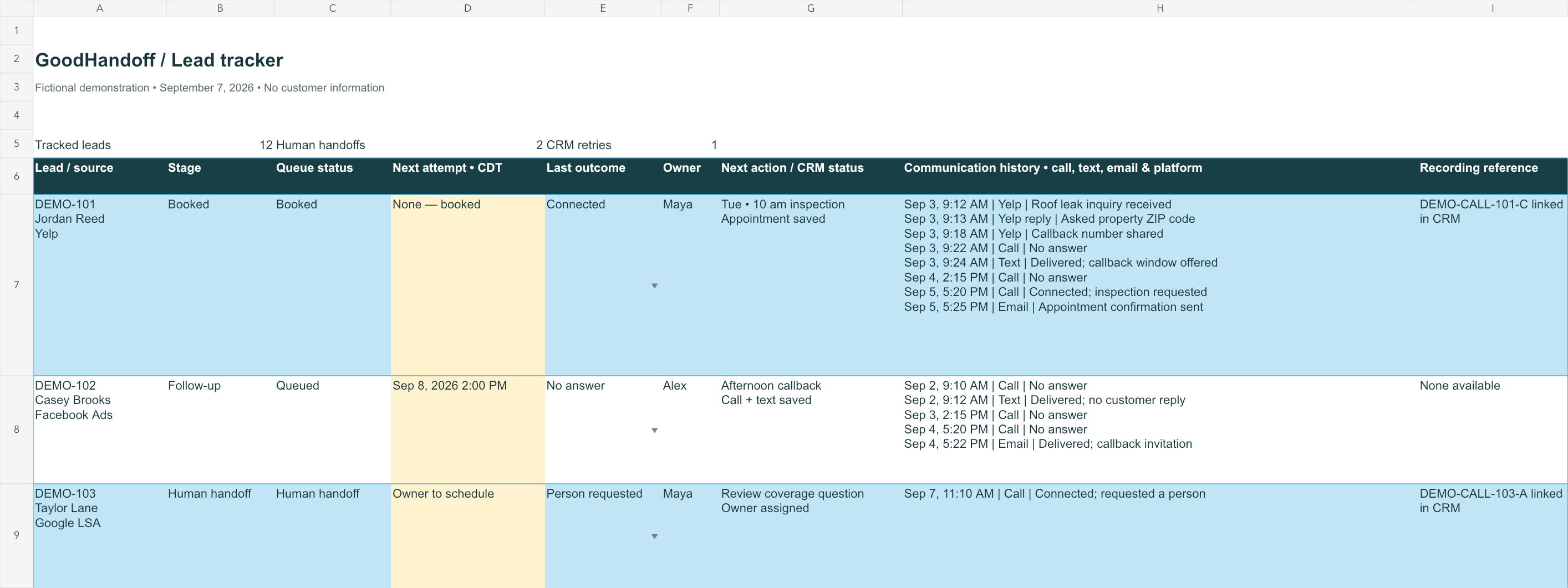
A real, editable sample workbook rendered for this walkthrough. All 12 leads are fictional; no customer records were copied. This operational sample is separate from the illustrative reporting cohort below.
Notice the differences between the rows. One lead is booked. Another is waiting for a phone number and should remain in the platform conversation. A coverage question needs a person. A failed CRM note needs a repair. Those situations would disappear inside a single green “processed” status.
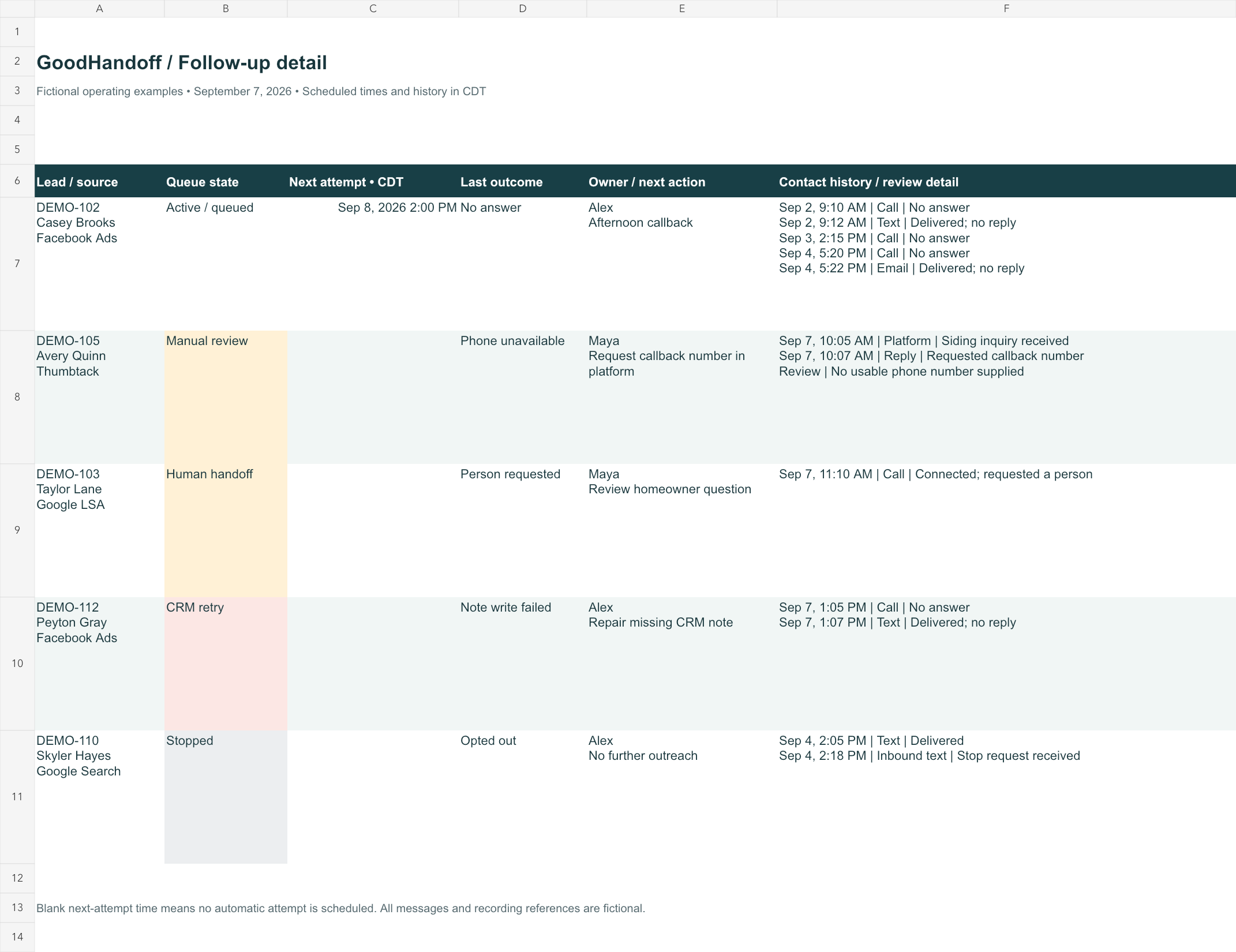
The detailed view makes the next decision visible. Each attempt has a timestamp, channel, and outcome. “Delivered” means a text reached its destination; it does not mean the homeowner replied. A queued lead has a scheduled next attempt, while a paused or stopped lead has none. Manual review includes the missing information and the action needed before outreach can resume. A CRM repair is kept separate from another customer contact, so fixing a failed note does not resend the message.
The tracker gives the team a working queue; the CRM holds the durable history. Calls, texts, emails, and platform messages are documented against the relevant contact and opportunity, with timestamps, direction, delivery or call status, and outcome. Available transcripts and recording references belong with the call record so an authorized teammate can review what was actually said. The sample uses placeholder references instead of real communications or recordings.
That history makes a handoff useful. When a teammate opens the opportunity, they can see the homeowner's request, the attempts already made, and the promised next step. They can continue the conversation without asking the customer to start over.
A failed update needs an owner, too
Connecting systems does not make every operation succeed. A call may finish while a CRM note fails to save. A booking may need a missing property detail. A duplicate event may arrive after the original has already been processed.
The workflow needs to surface the specific unfinished step. In the sample tracker, “CRM retry” means the note still needs repair; it does not mean the customer should receive another call. Retrying the missing write should preserve the completed conversation and avoid duplicate records.
This is a major reason to build the coordination layer around the business. Someone must own what happens between providers: matching the lead, preventing duplicate actions, respecting a handoff, and confirming that the result reached the destination the team uses.
Measure the path to a sold job
Once the source and CRM outcome stay connected, the contractor can ask better questions about marketing. Which sources produce conversations? Where do booked appointments fail to become held appointments? Which estimates become sold jobs? Where is the team waiting on a next action?
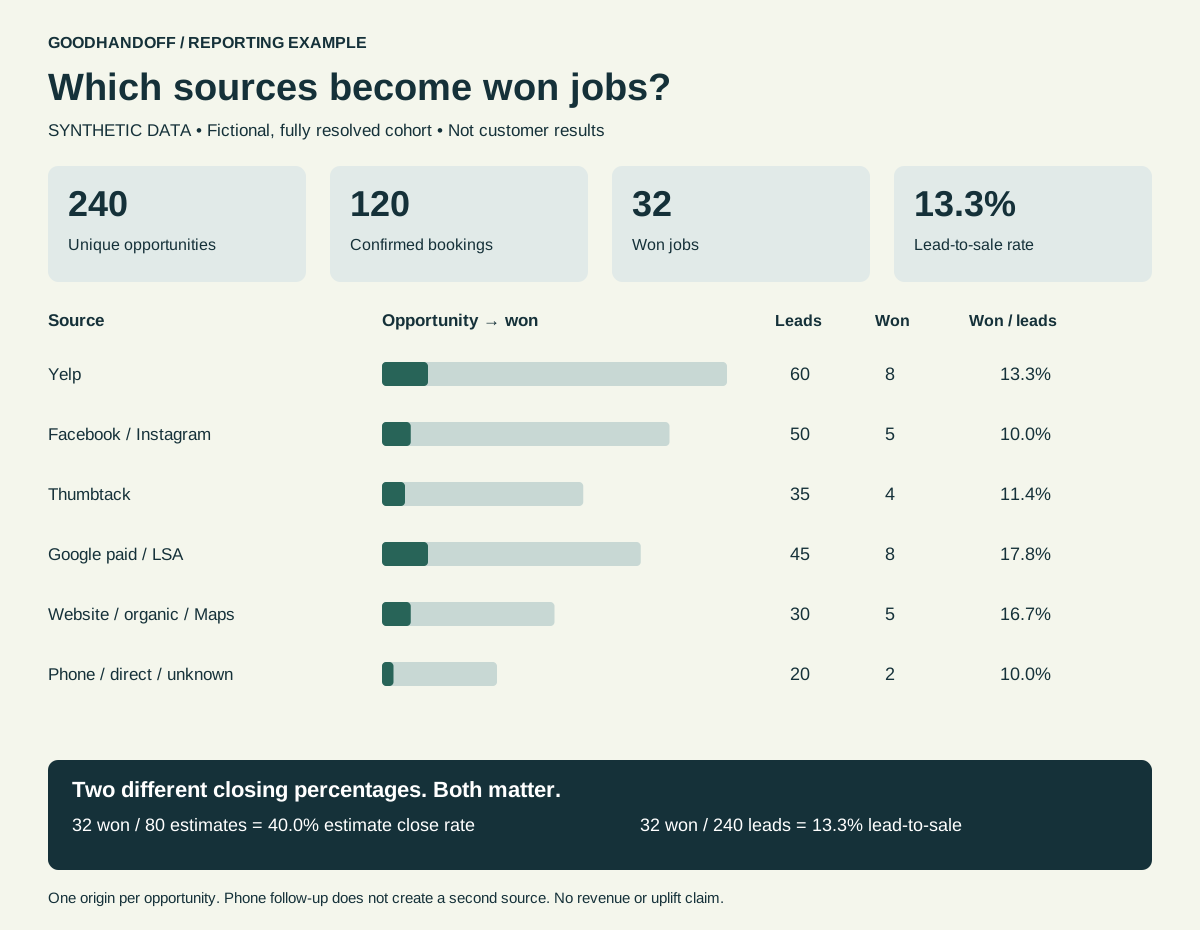
The chart uses a fictional, fully resolved cohort of 240 unique opportunities: 180 reached a two-way conversation, 120 booked, 100 held an appointment, 80 received an estimate, and 32 became won jobs. These figures demonstrate the reporting method; they are not this client's results.
32 wins ÷ 80 estimates
How well did estimates convert?
32 wins ÷ 240 leads
How well did the full process convert?
Both percentages use the same fictional cohort. Looking only at estimate close rate can hide how many inquiries never reached an appointment. The earlier stages matter too: this example has a 75% contact rate and a 50% lead-to-booking rate.
The insight comes from finding the stage that needs attention. Strong contact and weak booking may point toward qualification, scheduling, or the offer. Plenty of bookings and few held appointments suggest looking at confirmation and appointment handling. Those are starting points for reviewing the records, not automatic diagnoses from a chart.
Real source comparisons also need open opportunities, cohort age, lost reasons, and counts beside percentages. New leads have had less time to close. A channel with two sales is still a small sample. Booked revenue and collected revenue need separate definitions, and any cost-per-sale calculation should state which advertising, software, and service costs it includes.
Build around the handoffs your team needs to own
The value of this approach is continuity. The original inquiry, the follow-up conversation, the teammate's next action, and the eventual sales outcome remain connected. The contractor can see where a lead stands and who is responsible for moving it forward.
A scoped build starts with the lead sources and CRM the business actually uses, then maps the contact cadence, appointment rules, human handoffs, and reporting definitions. Approved platform access determines which connections can be enabled. The diagram shows the broader design, rather than claiming every pictured source is already active for this client.
Bring us a lead source and a handoff that keeps breaking. We'll map how the inquiry should reach your team, your CRM, and your results report. Talk through your workflow.